As a result of upcoming European regulations that will virtually end the sale and use of PFAS-containing products, all types of extinguishing foam that contain these harmful fluorine compounds should be replaced with fluorine-free alternatives in the coming years. The responsible removal, disposal and processing of foam from existing fifi-vehicles and stationary extinguishing systems and the thorough cleaning of this equipment is a technically and logistically complex and intensive process. Residues of PFAS-containing foams have proven to be very difficult to remove from tanks, pumps and piping. The Dutch companies Arcadis and Kenbri have jointly developed a cleaning process that they expect will meet the standards for ‘clean equipment’ set by the European Chemicals Agency ECHA.
The European restriction on the use of PFAS-containing extinguishing foam is expected to take effect in mid-2023. However, this does not mean that all extinguishing foam needs to be replaced at once. The European Chemicals Agency has set various terms for the transition to fluorine-free alternatives for various distinct user groups. Governmental fire brigades (municipalities/safety regions) will have 18 months to replace their PFAS-containing foams. For Seveso-III companies and their corresponding fire brigades, the PFAS-containing foam ban will only take full effect ten years after the implementation of the EU restriction.
The latter term allows Seveso companies and fire brigades that must prepare for large pool fires the time to make a safe transition to alternatives proven to be equally effective. Incidentally, these transition terms are subject to highly stringent conditions for situations in which PFAS-containing extinguishing foam can still be used. Examples include a location-specific PFAS extinguishing foam management plan, safeguards to prevent the dispersal of these substances in the environment and the thorough retrieval and processing of PFAS-containing waste water after use.

Scope of the problem
Many fire brigades have already begun the foam transition, generally making the switch to fluorine-free foams when extinguishing vehicles are replaced. The stationary extinguishing systems and vehicles with PFAS-foam that are still in use are the core of this problem. This category primarily comprises governmental foam extinguishing vehicles, industrial extinguishing vehicles, airport crash tenders, foam containers, as well as strategic stockpiles of foam kept in mobile or stationary tanks or storage containers. It is estimated that there are still many hundreds of thousands of litres of PFAS-containing foam in fire engines and storage locations all over the country. Likewise, spread out across high-risk companies with company fire brigades and the public-private Unified Fire Service, large quantities of fluorinated extinguishing foam are still used in the port and industrial zones of Rotterdam and Amsterdam.
Stockpiles of foam stored in vats or IBC containers are relatively easy to dispose of. However, this needs to be done in a thorough manner that can be monitored properly. We need to make sure that ‘old’ stockpiles of PFAS-containing foams are transported responsibly, without any spillage or leakage hazards during transportation. Moreover, these materials need to be processed via a (preferably) certified procedure by a specialised processing company in order to render these PFAS compounds harmless. However, the capacity of such processing companies is limited.
The PFAS-containing foams still present in fire engines are a bigger issue. Many fire engines, especially those used by fire brigades in the (petro)chemical industry, feature an integrated foam tank with capacities ranging from hundreds to thousands of litres. The foam is mixed in a mixing system within the vehicle and is then sprayed onto the fire through monitors or fire hoses by means of the fire pump.
Max concentrations
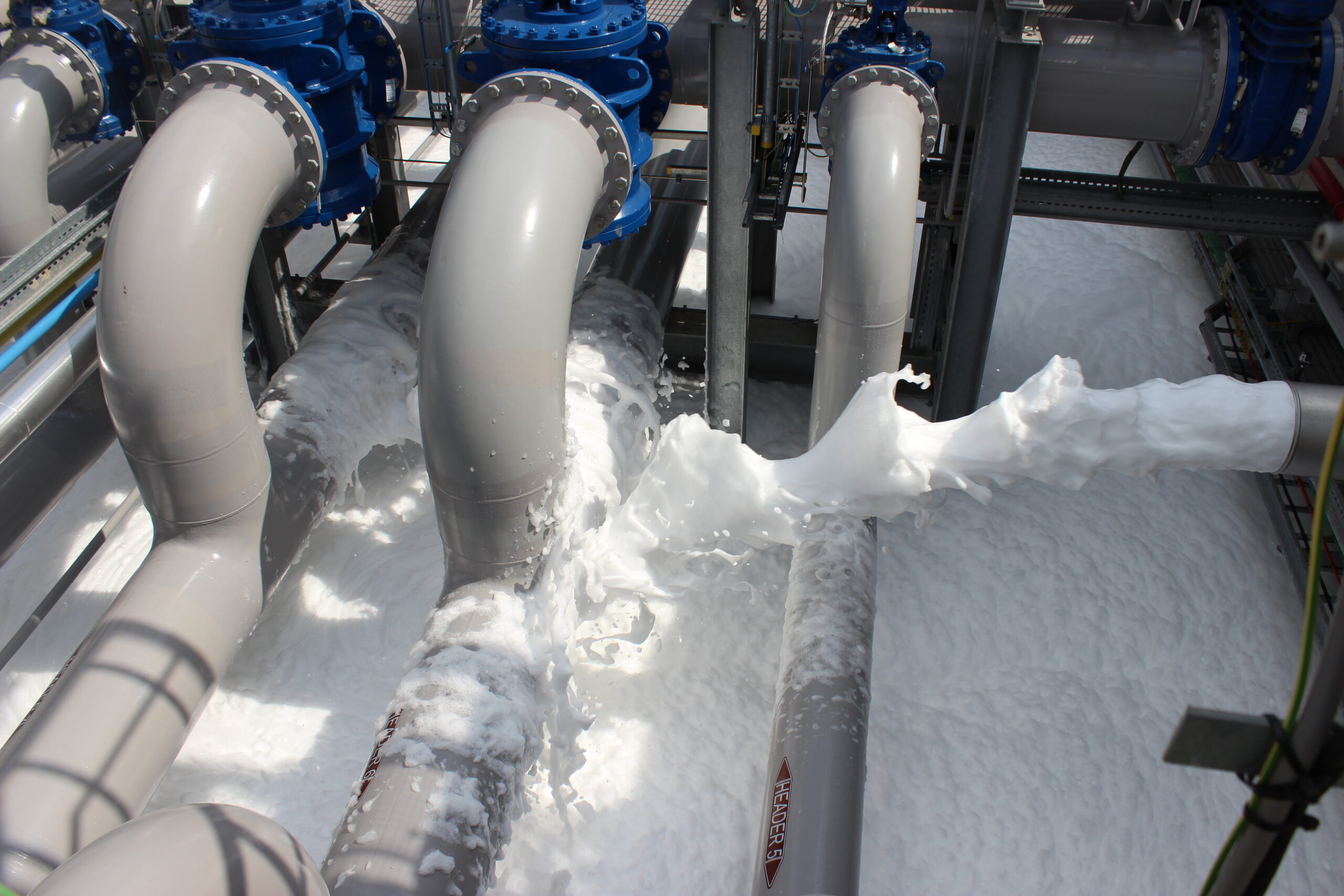
Replacing fluorinated foam with a fluorine-free variety may seem a relatively straightforward operation, but appearances are deceptive. Simply ‘draining’ the fluorinated foam from the tank and ‘rinsing’ the pump and mixing system of the vehicle with water before adding the new 3F foam just will not suffice. PFAS-containing foam residues tend to strongly adhere to the sides and bulkheads of tanks as well as the pipes, pumps and fixtures of the mixing system, even after rinsing. As such, the new foam could be ‘contaminated’ with PFAS due to ‘leaching’, resulting in excessive concentrations of fluorine compounds in the environment after all.
What is an excessive concentration? The EU PFAS restriction contains strict norms for the concentration of fluorine compounds that may be released during the extinguishing process due to minimal residues of ‘old’ foam left behind after thorough cleaning of the equipment and materials. For C-8 containing PFOS this concentration should not exceed 25 ppb (parts per billion). The C-6 containing PFAS has a maximum of 1,000 ppb. And the combination of various PFAS should not be higher than 250 ppb. PFAS is a collective name for 6 to 10,000 different fluorine compounds. The 1,000 ppb applies to all PFAS compounds. These may seem like negligible concentrations, but due to the effects of PFOS and PFAS on the environment and health, the EU has opted for extremely severe norms in the restriction proposal. Due to the severe ‘adhesion’ of old PFAS-containing foam residues in firefighting equipment, however, it will be a great challenge for the industry and (company) fire brigades to meet this norm.
Protect health and environment
The foam transition is a necessary operation to protect the health of firefighters and other professionals that may come in contact with extinguishing foam on the one hand and to protect the environment on the other. Nonetheless, this transition and the corresponding severe requirements for the disposal of fluorinated foam and the cleaning of materials and equipment present the fire brigades with a number of dilemmas and challenges. First of all, they will have to thoroughly inventory their existing stockpiles of PFAS-foam and draft a detailed management plan for the use of these substances. Moreover, the ‘scope’ needs to be considered: which items that came into contact with the foam should be included in the cleaning process?
Thorough, location-specific descriptions of situations and conditions in which the foam may be applied need to be drafted. In principle, only ‘class B’ fires, meaning liquid pool fires so large they cannot be fought with an alternative, fluorine-free extinguishing agent, are exempt from the restriction during the transition term. On top of that, the plan must include a thorough description of the way the polluted extinguishing water with fluorinated foam residues is retrieved, disposed of and processed in case foam is used. The plan also needs to state how the company in question intends to ensure this process is performed by a certified specialist.
Moreover, the users should consult the relevant authorities as well as their insurer to ensure the use of fluorinated foam is allowed during the transition period and that any costs related to the retrieval, processing and, if necessary, remediation of the surroundings of the fire are covered. On top of that, companies need to make sure that they continue to meet the conditions for (company) fire brigade performance stipulated in their license during the transition period and the switch to fluorine-free alternatives.

Manage the change
For the companies and fire brigades involved, it is crucial to properly prepare for the foam transition and to integrally consider all aspects of the switch: the purchase of fluorine-free foam and the need to ensure equal effectiveness in normative, large fluid fire scenarios, the potential need to adjust the technology and equipment in fire engines and extinguishing systems to the new requirements of fluorine-free foam varieties, responsible disposal and processing of ‘drained’ and stockpiled fluorinated foam and the thorough cleaning of all equipment to meet the severe concentration norm for PFAS after cleaning.
These required actions will force industries and their fire brigades to draft detailed Management of Change plans (MoCs) as a guideline to ensure diligence and to make sure the entire transition takes place within the framework of European law. This way, users can ensure that no ‘cross-contamination’ takes place due to residues of fluorinated foam in tanks, pipes and equipment when extinguishing vehicles are replaced and cleaned.
Five logic steps in the cleaning process
In order to ensure a safe and responsible cleaning process, all organisations involved – governmental and corporate user organisations, maintenance companies for firefighting equipment and PFAS waste processing companies – should duly prepare themselves. Procedures and methods need to be developed and staff need to be trained and equipped with the correct personal protective equipment to optimally protect them when replacing foam and disposing of fluorinated extinguishing agents. Having a risk inventory and evaluation (RI&E) drafted by a skilled occupational hygienist to serve as a guideline is an important must.
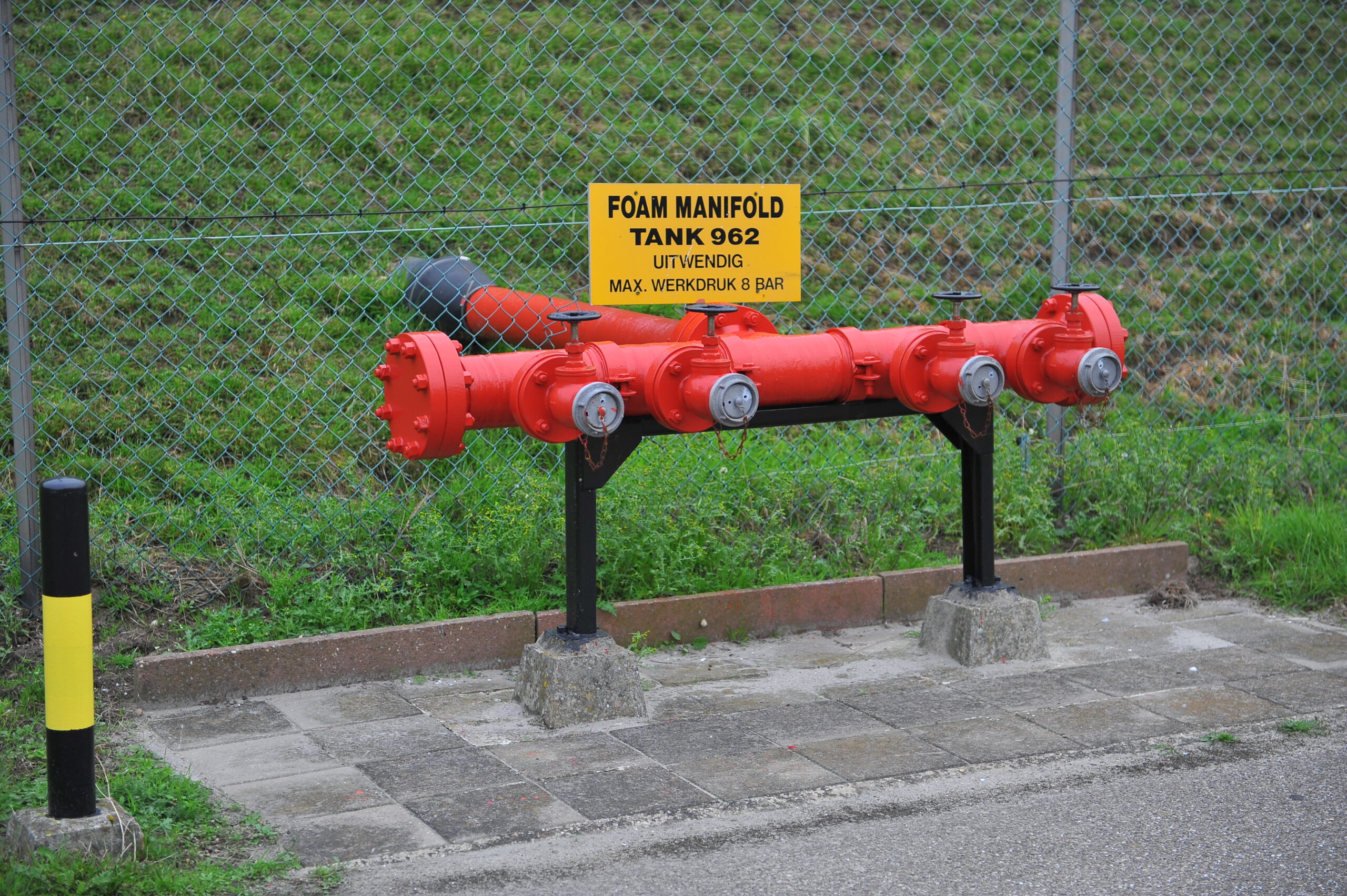
Which brings us to the cleaning process itself. As stated above, simply rinsing with water after removing fluorinated foam does not suffice to remove all PFAS residues from installations. Nooks, crannies and connectors especially may still contain built-up foam residues. Arcadis, as engineering firm, and Kenbri, as producer of stationary and mobile extinguishing systems, have jointly developed a procedure they expect will sufficiently ‘clean’ materials and equipment to meet ECHA standards. A pilot with a number of vehicles owned by company and governmental fire brigades has shown the effectiveness of this procedure. The procedure comprises a five-step approach. The entire extinguishing system is first given a lengthy and thorough rinse with hot water (over 50 degrees) containing a special rinsing agent.
In each day-long step, a different proportion of water and rinsing agent is used, and samples are collected after each step is completed. The residues collected after the tanks, pumps and pipes are rinsed, retrieved and submitted to a specialised processing company as PFAS waste. After these three rinsing steps, an ‘oxidation step’ is performed. The last of the rinsing water is analysed to determine how much PFAS it still contains. The fifth and final step entails analysing the samples taken after rinsing and oxidation in a laboratory. If the analysis shows that the measured concentration of PFAS still does not meet the EU standard, the entire rinsing process needs to be repeated.
Certification of process, waste treatment and lab analysis
It is essential that the rinsing and residue retrieval processes take place under completely controlled circumstances, including sufficient measures to guarantee occupational safety for the employees involved and to prevent any spillage or leakage hazards. The entire cleaning process follows an independent certification standard, called BRL (Branche Guide Line). The same goes for the disposal and processing of the retrieved residues by a processing company. A certification standard and quality label for the cleaning and processing procedures are clearly required to ensure diligence and to minimise the risk of exposure. The third relevant quality variable is the activities of the laboratory analysing the results of the process. This assessment will also be certified.
The process described also shows that thorough cleaning requires a significant amount of time. At least five days in the best-case scenario, to be precise, if the analysis results after performing the steps are positive. The industry and fire brigades need to keep in mind that their equipment will be out of operation for five to ten days during cleaning.
To summarise: thorough cleaning of fire engines and extinguishing systems is a specialised process that requires diligence. Moreover, it is a time-consuming and costly process. Cleaning is an important part of the foam transition process and should be safeguarded where possible. The process developed by Kenbri and Arcadis offers these safeguards. The health and environmental stakes are too high to settle for less.
About the Author

Kees Kappetijn is a consultant at/owner of Kappetijn Safety Specialists. Philip Stohr is a consultant at Kappetijn Safety Specialists. The consultancy supports organizations with the design and establishment of Municipal and industrial emergency service organizations and is specialized in Mutual Aid initiatives in ports and industrial areas. www.kappetijn.eu. Kees Kappetijn and Philip Stohr are involved as policy and industrial safety experts in the UIFRS/Amsterdam project team.