
Experience from China National USAR Training Base
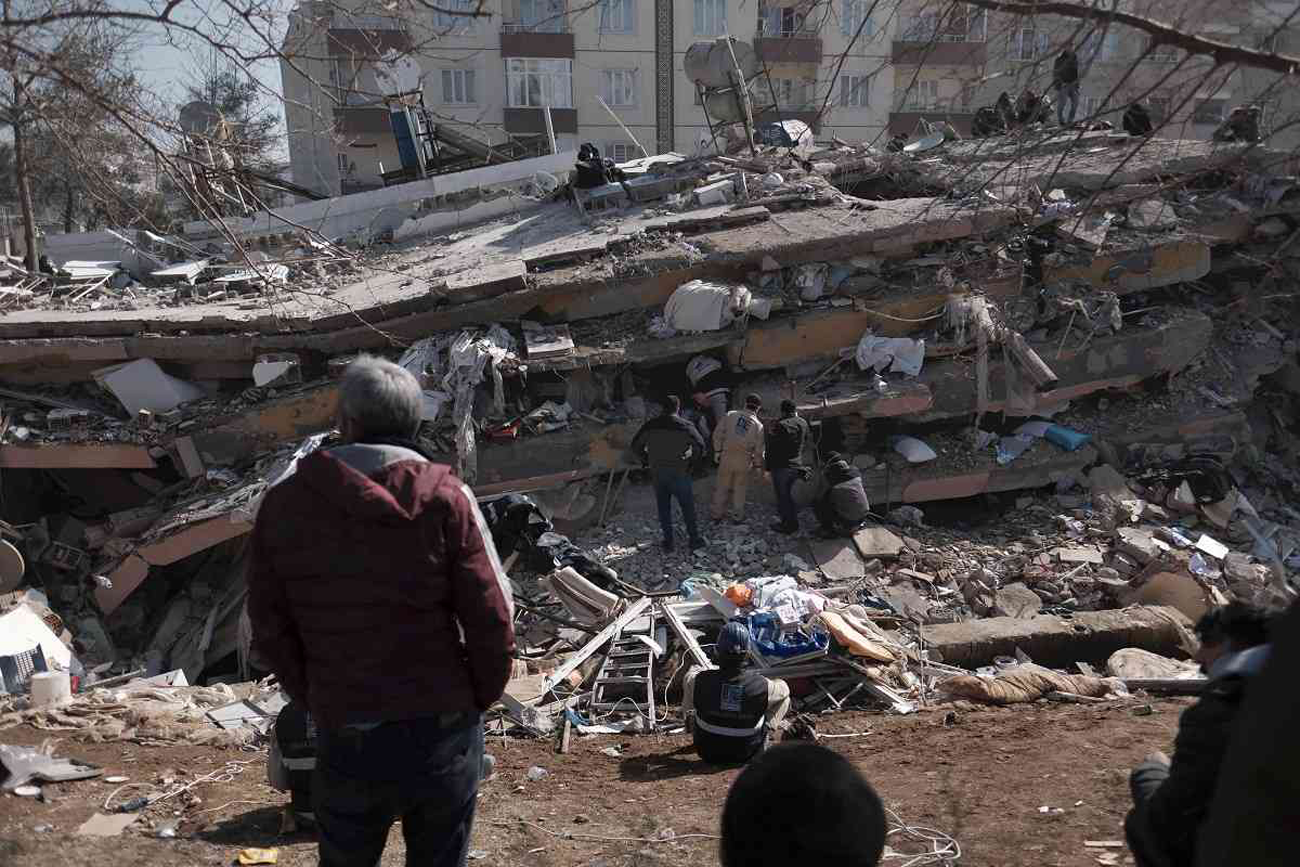
On 6 February 2023, the 7.8-magnitude earthquakes struck Turkey, affecting the hearts of people all over the world. Many urban search and rescue (USAR) teams from the world joined together with local emergency management authorities and carried out the humanitarian assistance mission in Turkey. There is high demand for international deployment because the USAR teams are required to work in complex disaster scenes. But how to train the professional USAR technicians? The training ground is critical because the USAR technicians need to experience different scenarios in complex environments before encountering real missions in the future. In this article, we share the experience of the China National Training Base for Urban Search and Rescue (CNSART) for USAR training and some suggestions for the design of training grounds.
As China and Turkey are both located in the Eurasian seismic belt, both are among the countries with the most severe earthquake disasters in the world. Compared with the 20th century, the number of buildings and the population have increased hugely, resulting in huge loss of life and property in earthquakes. For example, the Turkey earthquake in February 2023 killed more than 44,000 people, and more than 160,000 buildings were toppled or severely damaged. It became the most significant disaster in Turkey’s modern history. In order to protect the people in major earthquakes, the Chinese government established the CNSART in 2008. The training base covers an area of 130,000 square [metres?] and can simulate various types of building collapse scenarios. Every year, more than 2,000 trainees from international and local USAR teams, NGOs as well as emergency management groups are trained here. However, according to the current training mode of the base, there are some differences from actual rescue operations.
The difference between training ground and real incident scene
The trainees can learn the search and rescue skills to locate and extricate victims in the CNSART because there are three types of training ruins there, i.e. simulated buildings, steel structures and prefabricated components. The trainees can learn the search and rescue skills to locate and extricate victims in the simulated collapsed structures, such as resident house, chemical plants, etc. The steel structure is mainly used for rope rescue training and simulation of steel-structure building collapse; the prefabricated components are mainly used for individual rescue scenarios. We will go into more details in the ensuing paragraphs about the difference between actual disaster scenes and simulated buildings.
Pancake collapse

Pancake collapse refers to the change of vertical displacement of a building with few parallel dislocations. Due to the failure of foundations, walls, columns or floor supports, the building appears partial or whole after parallel collapse. This kind of collapse usually occurs in multi-storey structures, large-scale buildings and structures with improper design.
However, there are some limitations of simulated pancake collapse. For example, the structures usually provide sufficient void and fixed setting, leading to inflexible training design.
Inclined collapse


Inclined collapse is the angle change of a building with little change in its length and width, and a certain inclined angle is formed after the failure of one side of the load-bearing components, such as longitudinal wall columns or foundations. Sometimes steel-structure buildings will be unstable because of vertical structure compression or tensile deformation. Inclined buildings can easily affect the surrounding buildings, forming a chain reaction.
Compared with actual rescue environments, the simulated wall damage caused by inclined collapse is not accurate enough, as the inclination angle is fixed. Besides, the internal furniture is fixed as well. The structural wall also cannot be cut and broken into while training.
Compound collapse


Compound collapse refers to two kinds of damage, incline and collapse. Both may occur at the same time, or the damage may affect each other. For example, inclined collapse may break off floors due to excessive inclination, or cause collapsed or crushed bottom floors, accompanied by a certain torsion Angle.
Compared with the actual rescue environment, the structure cannot simulate falling objects and the damage of the floors, sharp objects and gas leakage, etc.
Differences between training and real situation
Using rescue equipment
In USAR training, use of rescue equipment is usually adjusted according to the situation, which is relatively fixed. However, in actual operations, the USAR team chooses the equipment with limited information and resources. There are no golden rules for selecting equipment. In fact, the USAR technicians can freely choose all types of heavy rescue equipment in training, such as fuel for machines, standard beams for shoring, high-pressure gas cylinders for pneumatic equipment; however, there may be a shortage of these resources at the disaster scene.
Mental health of rescuers
Most of USAR training is focused on skills training. But the USAR technicians may need to face different challenges, such as climate, environment, culture and language. At the same time, fatigue is also a big issue for prolonged operations. In addition, the dummy will be used as ‘trapped victim’. However, the USAR technicians need to face a real human in the real environment, and they may find a dead body in the worst case. Psychological disorders in inexperienced USAR technicians can occur. According to the results of the psychological assessment questionnaire conducted by the CNSART, about 20% of the trainees experienced symptoms such as depression, anxiety and paranoia after participating in earthquake response operations. Moreover, experienced rescuers can suffer greater psychological pressure than experienced rescuers because they may flashback to previous traumatic.
Training environment is extremely safe and stable
Compared with the controllable training environment, the real disaster scene is dangerous, in particular the small void in the collapsed structure. From the perspective of the building structure at the worksite, the structural risk is not real. It relies on the information provided by the experienced trainers. In addition, some debris and furniture in the worksite are symbolic objects. It is far from the actual rescue environment.
Practicable solutions
Smart ruins
Some smart devices, such as cameras, sensors, audio and video devices can be installed in the training ground enabling training performance to be recorded and scored, enhancing overall completeness, objectivity and reliability of evaluation. At the same time, the trainees could also receive immersive training using visual, lighting and sound effects. A comprehensive laboratory integrating scientific research, teaching and experiment can be built with USAR technology to create an observable, measurable, controllable and repeatable training ground. This helps to promote the digital transformation and provides intelligent, data-oriented and visualized decision support for USAR training.
Varied and realistic training environment
The ‘disaster city’ contains multiple buildings, such as schools, hospitals, nursing homes, supermarkets, commercial buildings, high-rise buildings and complex residential houses to simulate a large-scale disaster scene. This enables trainees to practice assessment skills, sectorization, USAR marking system and different USAR techniques in a complex environment. Swing panels allow buildings to be adjusted to training needs. It allows trainees to handle different layouts of buildings each time.
Physiological training facilities
In order to allow the trainees to experience the extreme environment, the training ground could simulate different extreme environments, such as low and high temperatures, high-altitude anoxic environments and high wind, heavy rain, smoke, etc. Mixed reality (MR) technology can be introduced to create extreme virtual environments.
USAR training is important for improving the capacity of USAR teams. Therefore, the simulation training facility is critical as it allows the trainees to gain more experience and have the opportunity to practise their knowledge and skills. However, it is limited due to training safety, resources and logistic support. But we can still improve the experience of the trainees in training grounds and develop immersive experience technology so that trainees can experience the result of ‘mission failure’ in a controllable environment so that they can learn from failure to enhance their operational effectiveness.
About the Author

Mr Zhang Yu
Mr Zhang Yu is USAR Engineer of the China National Earthquake Response Support Service and USAR instructor of the China National Training Base for USAR.

Ms Wang Yang
Ms Wang Yang is USAR Engineer of the China National Earthquake Response Support Service and USAR instructor of the China National Training Base for USAR

Mr Bruce Wong is Country Representative of the International Association of Emergency Managers and USAR instructor of the International Technical Rescue Association.
