In 2014 I received an enquiry from a man claiming to represent a large corporation in Mexico. He wanted me to review and evaluate a fire department in the city of Culiacan, Sinaloa. Some of your readers might already think it sounds familiar, probably because it is considered one of the world’s most dangerous places. Culiacan was the centre of operations for narcotics king Chapo Guzman and is home to the largest and most powerful drug cartels on the planet, so my first reaction to the request was not exactly enthusiastic. But after receiving assurances about my safety, I agreed and arranged to take a team over there.
My firefighting career began in the UK, but since 2002, I have dedicated my career to reviewing and improving municipal, aviation, industrial and commercial fire and rescue services worldwide.
I’ve been compared to the chef Gordon Ramsay, not because we are both British, or similar ages and certainly not because I’m as foul mouthed as he is. He gets called in to review restaurants that are failing, in a crisis of some sort, or simply need modernising. I do exactly the same with fire departments and like him, brutally expose the problems, then build up the self-esteem and leave the organisation in better condition.
I come in and turn over every stone, examining everything from legislation to staff morale and operations. I’m not someone who writes a fat report, collects the cheque and walks away, I work with the politicians, legislators and Fire Chiefs, in offices, on the training ground and I take an active part in emergency operations until the recommendations are proven and standards achieved.

The UK Government handed me the job of developing the first ever fire and rescue services in the Turks and Caicos Islands at the age of 33. It may sound like a pretty insignificant place, but being given the freedom to single-handedly develop an organisation from concept to completion at such a young age was an unparalleled opportunity that led me on this unusual career path.
The success of that first project led to government work all around the world, before I realised that I could be doing the same thing without the political influence.
Most people get into consultancy after they have retired from one local or national fire service organisation and typically refer to familiar practices from that career.
After 34 projects on 5 continents, I have developed a collection of global experience and insight that is unique and gives me a totally different set of perspectives when I approach a problem.
Our biggest enemies in this profession are tradition and pride. No-one wants a foreigner telling them that they could do things differently or that they are stuck in their ways.
I’ve made a career out of arguing with Fire Chiefs and coming up with solutions, which after two divorces, is something I haven’t been able to apply to my personal life.
The more I travelled, the more I learned, and it soon confirmed that we in this profession often have no clue what our counterparts on other continents are doing, it also confirmed that we arrogantly think we are doing it best.
Take the USA and the UK, two of the leading practitioners in the fire and rescue industry. Despite sharing a lot of history, the way the two fire services operate is completely different. Both have some world class methods and both have some weaknesses too, if more practices were shared, both institutions would benefit greatly.
Many continents and countries can bring something different to the table;
- Pioneering Flashover (Backdraft) tactics and Coldcut structural firefighting technology from Scandinavia
- Wildland firefighting strategies from Australia
- Some of the most advanced vehicle extrication technology from Holland and Germany
- CAFS was born in the USA and
- The Brits lead the way in SCBA accountability systems.
But sometimes the poorest fire departments (FD) are the most resourceful. I recently worked with firefighters in South America, who were facing a problem that was solved by introducing a solution I had seen in West Africa.
My job is to improve FD by enhancing what they do well and refining or replacing other practices with better ones that they had no idea existed.
So, the next location on my global fire service ‘Reform Tour’ is Culiacan, Sinaloa. The initial 8-day review of the FD led to a report with recommendations. No one shot me, or took me hostage, in fact the experience was very positive. Passionate firefighters, amazing seafood, great beaches and some truly lovely people.
I was contracted to return for 3 months and put the recommended changes in place.
The company that hired me finally revealed themselves to be Coppel, think Sears of Mexico but way bigger. With 1400 department stores, their own bank and 98,000 employees, it is a gigantic organisation. The owners are devout Catholics, involving themselves in all kinds of charitable and philanthropic projects across Mexico.
Why sponsor a project to modernise a FD in Culiacan? Firstly, it’s where the company has its roots, its corporate headquarters but also where 6 employees lost their lives in a major fire in 2010. They were conducting an inventory in one of the stores when the fire broke out, there were no fixed firefighting systems and the exits had been locked for security reasons.
The FD response was uncoordinated and personnel conducting search and rescue were lucky to get out alive.
Both Coppel and the absence of fire prevention legislation in Mexico came under scrutiny during the investigation, the company responded by completely overhauling internal fire safety in all of their stores and warehouses, installing fixed firefighting systems, creating in-house fire teams and making emergency evacuation training obligatory for all employees. It all sounds fundamental to most of us, but in a country where codes and enforcement are in their infancy, it was a big deal.

The next step was to look at the local fire service and that’s where I came in. Coppel have taken a decision to dedicate their philanthropic efforts to reforming the fire and rescue service industry in Mexico.Mexican FD copy their US counterparts, but without the same level of education, no codes and a fraction of the resources.
The IFSTA ‘Fundamentals of Firefighting’ book was translated (badly) into Spanish in 1998 and to date is still the only professional technical reference for firefighters in Mexico and Latin America.
The Culiacan FD had 26 emergency vehicles with only 3 personnel (Engineers) to drive them! They tried to justify having a pumper, tanker, rescue, ambulance and aerial at each station because that’s what similar sized cities have in the US.
Every project has its own particular challenges, apart from the absence of any fire service legislation, no legal obligations to adopt standards such as the NFPA and not one public fire school in the whole country, there was a high level of personal risk in Culiacan. I was shadowed by Cartel scouts throughout my stay who wanted to be sure I was actually a firefighter and not a spy. I also encountered issues of internal corruption and malpractice. It’s hard to believe that in our profession, people in positions of authority would try and make money from a FD, especially when firefighters are relying on donated equipment sharing boots. The people involved were exposed, removed and replaced. I completely changed the administration of the department and their systems of operational response.
So that brings us to where I am now. My team is currently working on a 15-month project to turn the FD of Hermosillo, Sonora into an administrative model of excellence for Coppel to showcase for potential replication across the country.
Hermosillo suffered one of the worst fires in modern history when 49 children died in a preschool kindergarten in 2009. Like many of you reading this, I have seen some atrocities in my career but researching this particular fire and seeing the memorials in the city was really distressing. Any firefighter will tell you that emergencies involving children are the most harrowing, this must have been unimaginable.
It highlighted three major problems:
- Lack of legislation
- Malpractice and
- A totally inadequate FD.
Following the investigation, it wasn’t the law makers or owners who went to prison, it was the Fire Chief.
An event of that magnitude would have been challenging for any fire service but for firefighters who have no initial or ongoing education, zero policy or procedure and a collection of donated assets, it was a disaster.
So, the Coppel family chose Hermosillo to get the ‘Gannon Makeover’. During 15 months we have developed over 100 bespoke policies and procedures, annual training programmes, integrated risk management plans, rank to role reorganisation and completely changed the operational and administrative structure of the department.
The roll out of this new model across the country relies on legislation and perhaps the best news of all from this project is the drafting of national fire service laws which are due for presentation to cabinet in the coming months. My team have worked tirelessly with lawyers and legislators taking the very best regional and international examples and developing a hybrid model that is modern, relevant and will be the basis for real reform.
All political parties have already approved the proposal and the whole firefighting community is eagerly anticipating its introduction. I am both proud and privileged to be part of such a significant piece of legislation, it’s remarkable to think that I was a firefighter cycling to work in Peterborough in the rain 16 years ago, now I’m making history in Mexico.
From the outset, I made it clear to both Coppel and the Mexican government that the root of change in the country is the establishment of a first national fire training academy. The design and costing phase is complete, locations are being considered and subject to the publication of the new laws, development will begin this year.
We are talking with IFSTA, the NFPA and ProBoard to ensure that teaching materials and accreditations are of the highest possible standard, the intention is to create a world class facility that will attract students from across Latin America.
None of my projects are easy and recent political events in the US made this latest job a lot more complicated. I have no personal opinion on US politics, there is enough drama going on in my home country with ‘Brexit’ and terrorism, but being a team of foreigners working just across the Arizona border in the middle of the US Presidential elections when the ‘Build the Wall’ was on every TV screen was not good. The highlight being when one of my guys was refused service by a florist on Valentine’s Day.
Getting the Mexicans to accept unfamiliar practices has been a challenge, but nothing new for me and slowly but surely, we are winning hearts and minds.
While my team work in Mexico, I am still globetrotting, arguing and reforming. Sharing information and practices on a campaign that makes both our firefighters and communities safer.
For more information, go to www.gannonemergency.com
About the Author

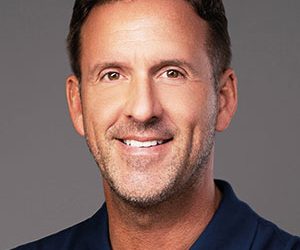
Chris Gannon has been involved in the FRS industry for almost 30 years and is recognised as a pioneer of international reform. He is the Managing Director of the Gannon Emergency Solutions Group with offices in the UK, USA and Latin America.